Showing posts with label Kyoto. Show all posts

Thursday, August 8, 2024

Returning to Kansai


View from Umeda Sky Garden (with the Gate Tower Building in the background!)


After quite a few long years away, I just came back from my first trip to West Japan in about six years. This was the first time I'd been to the Kansai Region in a long time, and my first time there with family. My fam didn't come visit me for the years I was living in Osaka - my mom is the very definition of a nervous traveller. It took a lot of convincing to finally get her to go, but now that both of my parents are retired, we'd been urging them to travel while they were still relatively healthy. And so, I planned and executed as perfect a 2-week Japan vacation as I could manage, starting in Osaka, of course.


It was so satisfying showing them all the things I love about the Kansai area. I was a little selfish in cutting Tokyo time SO short that they barely saw any of it at all (1 day in Atami, 3 days in Tokyo), but there's so much to see and do just in Osaka and Kyoto alone (never mind all the great places I would have loved to take them in Nara, Wakayama, Shiga, Kobe, et al) that even the week and a half spent there wasn't enough.


Not much had changed, in the places we went, except of course for the extreme number of tourists. On one level, I hate contributing to the overtourism problem. We skipped most places like Kinkakuji, Gion and Kyomizudera that would have been staples to take guests to ten years ago, in the pre-Instagram world. I tried to go off the beaten path when I could. When I saw the chaos of people at Fushimi Inari (when I lived there, there was never any significant number of people on the hiking trails, no matter what time of day we visited), I had tried to prepare myself for the fact that it had become one of the #1 destinations in Kyoto, but it was still mind-boggling to see. The days of using Fushimi Inari's trails as a way to get your daily exercise in (yes, I tried this in 2008 or so, since Keihan Fushimi was just a hop, skip and a jump away from my home station) are long gone. I did get up at 7 AM and hit the trail for old time's sake, and I mostly avoided the crowds, but I had to turn back at the pond, since we were due to move on to our next destination that morning. On that same day, I encountered my first extreme shinkansen delay - the eastbound Tokaido was 30 minutes late leaving Kyoto. Couldn't believe that happened on the day of my parents' very first and only shinkansen trip.


I have a lot to say about the trip, but not enough space to say it all in one post, so I'll divide it into a few entries. I hope you'll enjoy them.

Saturday, October 20, 2012

From Demachiyanagi | 出町柳から


On the topic of the Okeihan change over - I just found out that the Keihan Line actually has its own image song. That's so fantastic!

This track, released in 2003, is called "From Demachiyanagi."

I can't get over these lyrics! Maybe I'll translate them for a study project sometime?

出町柳(でまちやなぎ)から 電車は走る
ああ2人を乗せて 愛の2階だて
ダブルデッカー (そうでっかー)

三条から乗客が ふえだします
四条からは 買い物帰り
おしゃれな人々
七条やがて地上へ そして丹波橋
中書島(ちゅうしょじま)から 補助席が使えます
夕日をあびた酒蔵(さかぐら)の街
まるで影絵のよう
左には競馬場
まるでどこかのフリーウェイ
まもなく車掌もくる

(セリフ)ご用の方はこざいませんでしょうか

出町柳(でまちやなぎ)から 電車は走る
ああ2人を乗せて 愛の2階だて
出町柳(でまちやなぎ)から 電車は走る
ああ2人を乗せて 愛の2階だて
轉載來自魔鏡歌詞網
ダブルデッカー (そうでっかー)

この電車は 京橋までとまりません
枚方(ひらかた)市には
平日朝ラッシュ時の
淀屋橋行きのみ停車です
テレビカーなら
着くまでテレビが見れます
そのうちに京橋の街のあかり

天満橋(てんまばし)からまた地下へもぐります
次は北浜 そして終点は淀屋橋
淀屋橋が終点

(セリフ)ご乗車ありがとうございます

出町柳(でまちやなぎ)から 電車は走る
ああ2人を乗せて 愛の2階だて
出町柳(でまちやなぎ)から 電車は走る
ああ2人を乗せて 愛の2階だて
ダブルデッカー (そうでっかー)

Sunday, October 14, 2012

Keihan-chan

Keihan-chan (Keiko Morishoji) showcasing the goods of Higashiyama

In a PiTaPa ad
In 2000, the Keihan train line launched an advertising campaign called おかいはん (okeihan) to promote themselves using young, fashionable spokeswomen photographed around the Osaka-Kyoto area, seeing the sights and culture available in towns and cities along the train line. This campaign was still running when I lived in Osaka, and the current Okeihan girl was Keiko Morishoji (the idea being that she lived near Morishoji Station!), the third-generation Okeihan character, who started in 2006. Keiko (played by actress Jinno Sachi) was born into a musical family and was a Conservatory of Music student at the "Duck River Academy of Music." She was the face of the campaign until 2009, and I thought she was the cutest thing on this earth. Her clothes were bright, stylish and just the sort of things I liked to wear, and she was always doing something that looked interesting to me. I started to take photos of her ads when I saw them, and downloaded a bunch of Okeihan desktop wallpapers.


Emily often teased me about my enthusiasm for Keiko, whom I called "Keihan-chan," not knowing her name at the time. We travelled on that line pretty much daily, and often together, so whenever a new poster came out (and that was fairly frequently!) I was all over it. I professed my love for Keihan-chan every time I guided someone new through the Keihan train system. And then...then, they retired my Keihan-chan and replaced her with a new girl, Keiko Kuzuha!

Kuzuha was cute enough, but I never expected Keihan-chan to vanish so suddenly, so I was quite disappointed. At the time, I didn't realize that there were two other Okeihan spokesgirls prior to my arrival in Japan - Keiko Yodoya and Keiko Kyobashi. Well. 

As it turns out, the Keihan line is launching their newest girl to stardom very shortly - voting starts this Monday, October 15th, for the brand-new Okeihan campaign.

Yodoya, Kyobashi, Morishoji (♥) and Kuzuha

Well! I guess it's my civic duty, then, if we MUST have a new Keihan-chan, to make sure the proper one gets picked! Be sure to pop by Keihan's website tomorrow and cast a vote!

Wednesday, October 3, 2012

Tea and Tsukimi

Secret Teatime's chanoyu, Japanese tea ceremony, in Toronto
Photo from Secret Teatime's Facebook Page
This past weekend, I went to a nabe and tsukimi tea party held by friends from my time abroad. At times, I really do regret spending so much time in Japan alone and wrapped up in my hobbies - as much fun as I had trying my hand at aikido, ikebana and others, travelling all over Honshu by local train, and of course wandering everywhere in Kansai on foot and by bicycle, when it came time for JET events, I was so embarrassingly out of the loop that I imagine anyone not from my year would have a hard time remembering my name. My Japanese friends were largely in Tokyo, and many local friends, JET and otherwise, returned to their lives abroad. By my third year I was living the hermit life, and I have come to regret it a little since returning. Where I was antisocial in Japan, I now go out of my way to be social back home, via cultural groups, JETAA events and now, meeting up with a few familiar faces from JET.

I didn't even realize there were so many former Osaka JETs here in Toronto! I attended a dinner last month with a group of six or so and had a great time, though the tsukimi evening eclipsed (see what I did there?)  that by far. The founders of Secret Teatime are tea fanatics and students of the Omotesenke and Youkenryuu schools of tea, respectively, and Helen did her JET tenure in a city very close to mine. In case any of you readers forgot, I am a fan of tea of all kinds, so when she invited me over for nabe and tea ceremony, I could not say 'yes' fast enough.

Friends in Toronto, you absolutely must check out Helen and Sorlie's endeavors with Secret Teatime! They are setting up a studio in Scarborough, and are offering lessons in Japanese tea ceremony in the Youkenryuu style. Watching the ceremony on Saturday was a real treat, and we enjoyed luscious dark chocolates from Ambiance Chocolat. The chocolates were handmade and amazing, and brought me back to my days making trips out to the fabulous chocolatiers and bakeries in Kyoto. I'm really hoping to make it to more of their events in future and perhaps a few lessons as I've only learned the very basics of chanoyu. My roommate is almost certainly sick of hearing me talk about tea (though she graciously supplies me with it at Christmastime!) and I have a lot to learn about it, myself, so I'm looking forward to lots more!

Wednesday, August 29, 2012

Capsule Hotels

I've always been comfortable enough in small spaces, so the concept of capsule hotels really intrigued me when I first prepared to move to Japan. I looked up information on the Internet about where I might be able to find capsule hotels around Osaka and Tokyo for my (envisioned) many nights out on the town! As it so happened, I was too much of a cheapskate to stay out overnight often when I could make the last train home, but I did have the chance to try out a few capsules while in Japan.

If you don't know what a capsule hotel is, nothing sums it up quite like a visual:

Capsule hotel in Osaka Japan
Interior of a capsule

A capsule hotel is just a place to lay your head - you're trading space and amenities for the price, which is usually in the $30 USD/CAD range. I often stayed at the above hotel (Capsule Hotel Asahiplaza Shinsaibashi) in Osaka during the nights between the JET Mid-Year Seminar, a training session held over three days more than an hour away from my apartment. The cost of the hotel (¥2,900) was more than worth saving the 3 hours of travel time heading home after a long day and then back to Abiko first thing in the morning - not to mention the ¥600+ yen each way in train fare.

Most capsule hotels do not accept women, and this was one of two that I was aware of in Osaka that did. In fact, I'm told that the womens' floor (sealed off with a lock to prevent intrusion) at Asahiplaza Shinsaibashi was much nicer than the mens', and with less snoring. The beds you see in the photo above are stacked two units high and luggage is kept in a separate locker. In the womens' area, there was a public bath, sauna, television room and reading lounge. Guests are provided with pajamas and towels, and the bathing area has toothbrushes, brushes and combs kept in a sterilizer, hair dryers, lotions, Q-tips, make-up sponges and a few other disposables. Most hotels have a few mainstays built into their capsules - usually a television, radio and alarm clock are standard; the Shinsaibashi hotel also had an interior fan and some shelves. 

Each time I visited, I made sure to take advantage of the beautiful baths at this hotel. I wasn't sure I could manage it for the first time if someone else was in the bathing room, since it was still very early on in my stay and I was nervous at being the only foreigner there. I was alone when I stowed my clothes in the bathing room lockers and managed to almost finish washing my hair before another guest, a lady in her mid-40s, came in and started to shower. She didn't even give me a second look. so after a moment my awkward feeling passed and that was that. 

That first bath was amazing. I hadn't yet experienced Spa World, and this was a whole different beast anyway; it was more of a sento (neighbourhood bath) environment. The shampoo, rinse and soap from the showers smelled gorgeous, too, and after relaxing in the bath (made of black marble) I went to the sauna to dry off. They had everything I needed to make myself comfortable for the night and the nervousness entirely passed. That evening's sleep was very, very comfortable.

Most capsules are really pretty standard, though some, like Kyoto's 9 hours, really take it to the next level. Over the next few years I tried out a few capsule hotels in Tokyo as well, including some off-the-beaten-path choices like the womens'-only VIVI Roppongi one weekend when I had taken the Seishun 18 to Tokyo on a whim and didn't have a single toiletry with me except the contents of my purse. I still regret not taking good photos of that place, since it was really fantastic.

VIVI Roppongi capsule hotel in Tokyo for women
Awful photo of the bunks at the fabulous VIVI Roppongi

It was my first time going to Roppongi, and I was rather disappointed with the area, sadly. VIVI was great, especially the rock sauna, but the next few times I visited Tokyo on a whim back I ended up back in Shibuya instead. I also stayed at the Green Plaza Shinjuku once, but their facilities weren't worth the price in comparison. It just wasn't as nice as my capsule hotel in Osaka or as the capsule beds at Khaosan in Asakusa. 

I still regret not getting to stay in a tatami capsule at Capsule Ryokan Kyoto. Next time, Japan!!

Saturday, August 18, 2012

The Humid Japanese Summer

The Pepsi NEX summer life
Here in Toronto, our heat wave has finally broken, or so my roommate tells me - my response was "what heat wave?" The weather in Toronto, hanging around 30 degrees Celsius (86°F) has never really bothered me, compared to Osaka, which boasts some of the most humid days and nights in the country.

I often really miss summer in Japan. It's true, it was muggy, sticky and came part and parcel with all the bad stuff - I remember when all the maple candy omiyage I had brought from Canada fused into a giant mass, and ruining my first rice cooker by forgetting to clean it out before I left town during the hottest part of the summer. One year, I had kept some chocolate matcha Meltykisses from winter that, well, melted. As much fun as it was to go to festivals, I found yukata really stifling on the hottest summer nights, and distinctly remember undressing in a stall in JR Kyoto Station during Gion Matsuri just to get some of the heat off, before re-tying everything and slogging back out there. It wasn't great, but I detest the cold, so I quickly warmed up (ha ha) to the hot and humid summers and even began to enjoy them.

After Osaka, summers in Canada have been easy as pie. While my friends (raised on the east coast where both summers and winters are mild) suffer through humidity that's completely undetectable to me, I relish actually getting to wear short sleeves. 

In Japan I spent a lot of my summer days in the staff room at school, conserving my precious nenkyu (paid vacation days) for the visits of the many friends who stayed with me. I often worked through obon as the only person in the school! Thinking back to that, someone must have unlocked the gate every day, but it was rare to encounter even a single person through the whole 8 hours. I would let myself into the office and take the keys to the staff room, then sit at my desk near the window and write or read. No students, no teachers. It was somewhat eerie, but at the same time, very peaceful. 

The staff room had no air conditioner, but the fan was right behind my desk to provide some relief. Sometimes I'd go down to the womens' lounge and sit there awhile on the warm tatami. Tried not to do that too much, as it was very easy to fall asleep! I just became quite comfortable with the temperature in the school in summer - it reminded me of many summers spent at camp in New Brunswick. When I wasn't at school during summer, I travelled - to Tokyo, mostly, and once to Los Angeles. I traded the humid heat for dry heat, and didn't really care for the switch. Returning to Tokyo was a relief!

Of course, my love of the heat made winters all the worse - doubly worse after returning to Canada! Can't say I'm much looking forward to the temperatures starting to drop over the next few months...

Thursday, August 16, 2012

Miehina the Kyoto Geisha

If you enjoyed The Floating World and want to know a bit more about geisha in the modern world, I found this short documentary on the day in the life of a Miehina, a famous Kyoto geiko. I would really love to see an expanded version of this documentary or a longer film on modern geisha and maiko. Anyone have any suggestions?

Monday, July 9, 2012

Photo of the Day - Shijo-dori during Gion Matsuri

Shijo-dori in Kyoto during Gion Matsuri
Shijo-dori in Kyoto.
This photo was taken during Gion Matsuri (Gion Festival), so the streets were closed to motorists.

Thursday, May 24, 2012

Photo of the Day - Uji Green Tea

Uji is famous for their green tea
The city of Uji is famous for their green tea, which is exported worldwide.
"Green tea soba," buckwheat noodles made from Uji tea, are a speciality, too!

Wednesday, May 23, 2012

Smartphones

When I left Canada, nobody had a smartphone. The very first iPhone had launched the month before, and as this was a time before the App Store existed, only the most cutting-edge of the Apple fans and Blackberry deserters actually owned one. Myself, I only had a Samsung A660 that I was very proud could play Kefka's Theme from Final Fantasy VI when it sensed someone I didn't like coming in on my Caller ID.

Japanese cell phone
The Softbank 812SH in its natural habitat

On my first full day in Osaka, I bought a Softbank 812SH from Yodobashi Camera in Umeda. As an upgrade to my Samsung, it was dynamite. It could smoothly and quickly browse the extensive Japanese Mobile Web, had adorable emoticons, was quite slim and had a big colour screen twice the size of the one I was leaving behind. I sang the praises of Japanese phones to anyone who would listen. Sure, some of my students had televisions on their phones - I was content with just having mobile web. By the time I left Japan, two of my students had iPhones (this was a really big deal, especially for the girl who had the "first" iPhone in the school - 2009!) but the rest used the good old flip style.

When I landed back in the West, I thought I had walked from 2007 right into 2017. Almost everyone I knew had a smartphone - my brother had gone through two of them. It was going to be tough to cope with not being able to efficiently email from my cell (Japan uses email based messaging, not SMS, so in order to send a text message you must send to and from a phone email, not a phone number) so I decided to jump on that bandwagon. Now I own a HTC Desire, and grumble to myself at least weekly about how fantastic it would have been to have had a smartphone in Japan. Yes, I got along just fine without, but I would have been on any of these apps (linked to the Android versions for you, but there are Apple and other equivalents for most!) in a heartbeat:


Photo courtesy of the Google Play Store Photo courtesy of the Google Play Store Photo courtesy of the Google Play Store Photo courtesy of the Google Play Store Photo courtesy of the Google Play Store


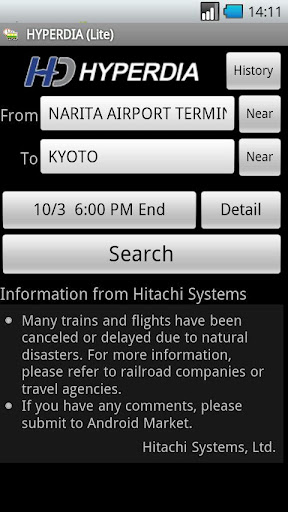
HYPERDIA(Lite) JapanRailSearch - Train schedules. I used the mobile web version on my Japanese phone. I cannot stress how many times I would have been (a) stranded somewhere or (b) lost, if I didn't have Hyperdia. So efficient.

Twitter - Likewise, used the mobile version. I loved being able to microblog about something, then go back and research it later on my computer. Tweets are short, too, so I was comfortable tweeting in Japanese and reading what my Japanese friends were posting なう.

Path or Foursquare -  I really liked Gowalla and it seemed like it had big support among Japanese users, but it was eaten up by Facebook. A check-in service would have been my number-one want in Japan. In a new country, everything is a big deal and it's tough to remember later all the things you saw and did, and tougher still to share them with friends back home. How cool would it have been to have been able to post a check-in from Tokyo Tower?

Instagram - I'm on the bandwagon now. This photo-sharing social media site would have been perfect for visiting temples, shrines, statues, skylines, anything!

WWWJDIC For Android - This is THE app for anyone struggling with Japanese. Can't read what's in front of you? Draw it into your phone and WWWJDIC will give you a translation.

Saora's JLPT Practice - Studying your Japanese while abroad? I hope so! This app is a great study tool that keeps you on pace for the Japanese Language Proficiency Test.

Kanji Draw 29% - There are a few kanji-drawing apps out there, but this is my favourite. Good interface and customization, and the app really makes sure you didn't just fluke into the right stroke order!

Google Translate - Straight up. Google's translate tools are very effective.

Barcode Scanner - QR codes are super popular in Japan and you can find them pretty much everywhere!

Japanese Traffic - I never drove, but this could be pretty indispensable to someone who did. The app real time traffic conditions in Japan, in Japanese and English.

Japanese Hot Spring Heaven - Searchable directory of over 4000 hot springs. Don't even care that there's no English version - I would manage.

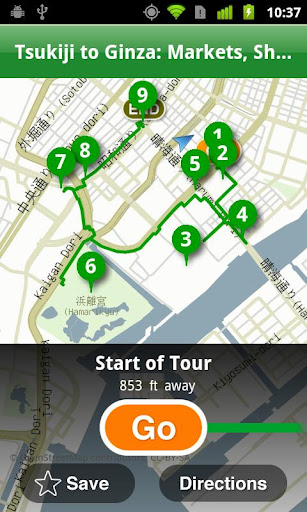
Tokyo City Guide - By TripAdvisor. Tokyo Art Beat also has great reviews! There are tons and tons of city guide apps out there that would have been much easier to work with on those weekend trips than carrying a book would have been. Check out GoodLuckTripKANSAI for the Kansai area, or search the Internet for your destination!

Tokyo Emergency - Can't vouch for how well it works, but this guide has emergency numbers for if you're travelling in the Tokyo area, including consulate and embassy info. And I lost my passport in Tokyo once, so thumbs up for carrying this sort of helpful info around!

As they say...."there's an app for that." If you are visiting or living in Japan, and you have a smartphone, don't let it go to waste!

Saturday, May 19, 2012

Bambocheur

In Ukyo Ward in Kyoto, there is a fantastic bathouse that I absolutely love - Tenzan-no-Yu. It is probably my favourite ofuro, though it's kind of halfway between as it has elements of hot springs (onsen) as well as the elements of a spa. Unfortunately, it is so far away that any trip there becomes a big excursion. My favourite stop on my way to Tenzan is, thus, this classy little bakery a few doors down, called Bambocheur.

Japanese cakes
An awful Google Maps snapshot of Bambocheur

The great thing about Bambocheur initially was that when I saw it (and as you can see, it's difficult to miss) through the bus window I knew I was getting off at the next stop. Useful when you cannot ever remember the name of the stop you want and fear you may have passed it while distracted during the 40-minute ride.

The next-greatest thing about Bambocheur is the cakes.

Japanese cakes and sweets from kyoto
Seriously.

Consider this perfect rainy Sunday - slip out of my stuffy apartment and take the train to Kyoto with a bottle of tea and some tunes in my ears. Buy the loveliest cakes I can find (top left was a pudding, top right was a melon cake, bottom was a strawberry monbran) and have the staff pack them up carefully with lots of icepacks to keep them chilled. Linger in the hot springs for an hour and drink nice cold coffee milk or fruits milk. Go home warm and happy, and photograph cakes because it just breaks your heart to mess them up. But you can't stay away so you eat them anyway. Yes.


Japanese cakes
Birthday cakes, 2010
photo by Gen
Japanese cakes
Coffee mousse roll cake
photo by Gen

#lifeinjapan!

Plenty of people have criticism for Japanese confectioneries because they do tend to be less sweet than Western desserts. That's fair, since the sugar is what usually makes cakes moist. Bambocheur cakes could taste like sawdust for all I cared (and they don't!) and I would buy them anyway, because they are too too pretty.

Tuesday, May 15, 2012

Tenzan-no-Yu

Early in my JET tenure I had the good fortune to meet with a friend of a friend from my hometown, Laura. She was in Kyoto studying at Ritsumeikan at the same time that I was in Osaka. We had only met once or twice before Japan, but were able to get together quite a few times after that. She introduced me to my favourite hotspring (onsen) in Kyoto one evening while our mutual friend was visiting.

Japanese bathhouses and hot springs
Tenzan-no-Yu
photo via http://www.greentour-kyoto.net  

I definitely would never have gone to Tenzan-no-Yu if the three of us had not walked over there from Laura's dorm that night. It's super out of the way for someone living on the Keihan line - the next time I went, alone, it took 40 minutes by bus from Sanjo Station. Each time I went, I literally made a full evening out of the visit, because it was so far - take the bus to the Katsura area, buy cakes to take home at the bakery, browse the Uniqlo shop, spend 2 hours in the bath and maybe having a snack, pick up groceries at the shop next door and a katsu lunch for the following day, then take the bus/train home for over an hour and a half. But oh, so worth it.

Japanese bathhouses and hot springs
The outdoor bath, located in a courtyard
photo via http://www.greentour-kyoto.net  

There are two hot indoor baths and one cold one, and a set with back-massaging jets. The temperature of each bath is on a digital display above it - neat! (40 celcius is a good temperature for me, and I avoid anything hotter than 42.) Outside there is one bath with a little waterfall over rocks, two of the barrel-style ofuro cedar tubs (with natural onsen water) and a gin-no-yu; this natural spring is filled with minerals that turn the water gold. There's also tatami and lawn chairs to lie down on, a salt sauna and a rock sauna, and marble slabs that you lie down on with the water running around you. Bliss~. A couple of times people have come to chat with me at Tenzan, but usually I'm kind of left to my own devices. While fancier than a "local" ofuro, the feeling is still much like a friendly neighbourhood bathouse.

Japanese bathhouses and hot springs
Gin-no-Yu mineral bath
photo via http://www.greentour-kyoto.net  

After sauna, soak and shampoo, I like to buy some fruits milk from the vending machine, dress, dry my hair, enjoy some Doctor Fish, have a massage in the massage chair...oh, do I ever love Japanese bathhouses. And at ¥1,000, Tenzan is a much better deal than Spa World, if 20 times more out of the way--!