Showing posts with label Living. Show all posts

Wednesday, January 27, 2021

Pandemic Melon Pan

An acceptable substitute, given the situation

Hello blog, it’s been awhile!

Like most of you, I’ve had little chance to be out and about in town recently, even though I’ve heard about new Japanese restaurants opening up, places closing down, changing hours, etc.

One thing I have noticed, in my neighbourhood at least, is the plethora of options for Japanese food available via delivery services that I had absolutely no idea existed. Normally I’m a bit meh on these apps, because I know a lot of them don’t give a fair cut to the restaurants, and when possible I want to support the restaurant directly. However, in the time of COVID, that’s harder than it used to be. Especially here in Toronto, where we’re under a state of emergency and all dine in options are completely closed.

I want to hope that the restaurants getting on board with DD or UE is helping spread the word that those restaurants exist and therefore are doing them at least a bit of service. I know I’ve found a couple new options in the neighbourhood and beyond that I never knew were even here.

Which brings me to the focus of today’s post!

A couple of weeks ago I started having intense cravings for melon pan. It’s been quite a while since I could get back to my regular source (....Japan), but my baking attempts in the past have also failed. I really just wanted to buy some and be done with it. I used up all my creative cooking/baking karma with the Dalgona phase (and subsequently a lot of Vietnamese egg coffees, steam milks and Thai iced tea batches) back at the beginning of the pandemic.

Muahaha, bring those tasty baked goods right to my door
In Toronto, traditional melon pan is harder to come by, and the only place I could think of that had it was Nakamura Bakery at J-Town in Markham. I thought to myself, well, I’m not willing to drive an hour for melon pan; not today, anyway. But surely something else more local must have popped up in the last 5 years!? Surely someone is making melon pan closer to downtown by this point!?

So I turned to the food delivery apps.

I did a couple of searches for Japanese food, and a couple of searches for melon pan, and I didn’t really find the traditional type that I was looking for, but I found something else of interest. Not too long ago in Baldwin Village (and two other locations), a new shop called Hattendo appeared selling cream pan, originally from Hiroshima. I’d seen their shop in Japan a couple of times; I used to walk by one when I was passing through Yokohama station. But I’d never actually tried their bread. I thought, well, they have cream pan with a melon pan top on it, and black sesame lattes, and they deliver to my house, so let’s give it a go. Ooh! Seasonal flavours!!

Turns out they don't really photograph too well, though

Hattendo’s “melon pan” is a pretty distant cousin of traditional melon pan - what I was really getting was cream pan with a melon pan top, so the interior was unlike melon pan at all. However, it did scratch that itch a little for me. And it definitely opened my eyes to the fact that there are a lot of good Japanese options that have surfaced in Toronto over the past few years.

Since melon pan day, we’ve also ordered in from Little Pebbles, a Japanese bakery in Kensington market, and I have several tasty looking izakaya dinner options marked for the next time we order in. There’s also a new ramen shop in the west end (an area that is sorely lacking in ramen at this point) called Musoshin, and they make shokupan! haven’t tried it yet, but looking forward to getting out there sometime and checking them out. Must be tough to open during this pandemic, so they probably need all the props they can get.

So the next time you’re craving Japanese food in Toronto, even if you want to go pick it up yourself to support the businesses, the delivery apps are actually excellent resources to find out what’s new around town.

In fact, I just discovered that I can get mochi donuts delivered to my house. Be right back...


Friday, November 20, 2015

If You're Happy And You Know It

Ride a bike!

(But not in Toronto, in winter.)


It really is unapologetically pink...I guess I see why M was so dismayed when they opened this sucker up at Calgary Airport!


Thursday, October 29, 2015

The Young and the Chariotless

When I landed back on Canadian soil in August of 2010, the first thing I did was purchase a bicycle. Having a new bike right away, I hoped, would take away the sting of leaving behind my mama-chari in Osaka, at the very last minute, as I hastily dropped the keys with a Post-It note on my co-worker's desk on the final day. I needed the bike right up until that day, and I didn't have time to deal with boxing it up for transport across the Pacific. I thought that at least if I left it at school, it would be used by someone, and perhaps someday I would see it again. I took the second key home with me, just in case.

The first week home, I bought a cheap Wal-Mart bicycle. I needed to get to work, and I'd become accustomed to the independence of travelling by bike. I also bought a helmet, because unlike in Japan, I was significantly more concerned about being hit by a car. It was a Raleigh five-speed cruiser, and not an expensive one; it did have a partial chain guard, which was the main thing I was missing about my mama-chari at the time, as I remembered ripping up a few pairs of jeans on my mountain bike as a youth. It also had the curved handlebars I liked on cruisers. 

I have to assume the Japanese adapted their bicycles from European ones, as they were trading with the Netherlands as early as the 1600s; Japanese bikes bear strong similarities to Dutch ones. The covered chain guard and skirt guard are very uncommon in North America. Fender mudflaps and rear racks occasionally show up on American-made bikes, but are considered standard in Japan, along with the rear wheel lock and ubiquitous front basket. I would have liked to go for a bike with all the trimmings, but I had to settle for what Wal-Mart had in their inventory at the time. In retrospect, I was actually lucky to get a bike that had two out of the six features I wanted. I installed a rear rack and basket myself.

Eventually, as all Wal-Mart bikes are wont to do, my bike began losing steam in its 4th year, and during a particularly rough trip down into the Nordheimer Ravine one autumn, my jacket bounced out of my rear basket and twirled itself around the derailleur, which fortunately did not end in my dying in the ravine. The bike was never particularly good at switching gears again.

Dutch in action at Casa Loma
But we're going off on a tangent now. As I searched for a replacement to my bike (I had taken that cheap Wal-Mart bike with me on the plane to Toronto, wrapped in a tarp - can you believe it?) I decided that it had to be Dutch or nothing. I wanted a skirt guard; I wanted a proper rear rack. I wanted a mama-chari. I walked down Bloor Street taking photos of bikes I liked and jotting down their make and model to Google later. I never walked by a bike without giving it a once-over. To my surprise, the premium to get such luxuries as full chain guards required paying CAD $600+ for the bike. As I looked at bike shop after bike shop, almost buying a Giant-brand Liv Simple, I realized that I would never be able to tick all the boxes affordably. I finally settled for a step-through Beater Bike, with a partial chain, and a rear rack. What I hadn't bargained on was how much less hill-friendly the Beater was going to be compared to my Raleigh, with its fat tires and five speeds. The Beater, gorgeous though it was, was useless on hills, and the tires were the perfect size for getting caught in streetcar tracks. Riding it was exhausting. So I went back to the drawing board, formulating a plan for my trip to Japan in February to just buy a cheap mama-chari, have them box it up right in the shop, walk it to the post office and pay to have it sent home. I figured I'd be out $150 for the bike, $50 for domestic, $100 for the international shipping. Maybe a bit from customs on the other side. That sounded a lot better than the $600-ish I was pricing for Dutch-style bikes with gears in Toronto.

I think you guys already know this is going to go downhill.

I left the job of actually buying one until the last moments of our trip. I looked at bikes at Asahi Cycle in Rinku Town and Tokyo, but I never spotted one close to a post office (an essential for this plan to work). Eventually, when I was on my own in Tokyo with just one day left in the trip, I realized this wasn't going to work. I went on Rakuten and found a seller that did international shipping for Daiwa bikes, and I bought a cute pink Nana+ bike. No need to drag anything to the post office myself! They shipped to Canada!

...except that they only shipped to Canada through their proxy service. I had used Tenso before, but not in a few years, and the hoops they had me jump through just to get the bike shipped anywhere were out of this world. I waited two weeks without seeing my item appear on the "my page" section, even though the domestic shipping said it'd been delivered. I emailed them, and had no response for days. I started to worry that maybe this company was less reputable than I originally thought. I sent a third help request, which got a response at last, and was informed since it was oversized, they hadn't yet connected the purchase to my account, oh, and also it was too oversized to be shipped abroad. It had arrived fully assembled. I learned later that this is the standard for bike shops in Japan. Tenso said they were unable to downsize it for me by removing the pedals/turning the handlebars, as they weren't trained to do so.

From there we began the lengthy process of finding a solution, any solution. Tenso offered to ship it elsewhere in Japan for me, but in order to do that, I had to verify my address in Canada. Mind you, I'd already done that when I bought things through Tenso in the past, but it had to be done again, including scans of my driver's license and the receipt of a postcard at my mailing address in Canada. That's right, I had to wait for a physical postcard to arrive by postal mail at my apartment. Only when they were satisfied that I really did live at my address in Toronto would they allow me to redirect the bike somewhere else, but obviously, not to Toronto! They urged me to let them courier it to a friend.

I don't have tons of friends in Japan whom I'd be comfortable asking for a favour so large as "can you receive this bike in the mail, bring it to a bike shop to take it apart, and put it back in the mail?" and even fewer that I wouldn't mind being laughed at by. (As genuinely fond as I am of my co-workers at 〇〇 High School, and as much as they already knew I was quirky, I prefer not to be remembered as "that one that asked me to ship a bike to her".) In the end, I asked my friend Nicole, of Irish Chocolate fame. She returned to Japan after leaving 〇〇 University and is now an English teacher in Chiba. She saved me from a separate mishap involving buying Mister Donut cups on Yahoo! Auctions, and so I thought she might be able to intervene again. Luckily for me, Nicole agreed, and some time later my bike appeared, fully formed, at her apartment.

Nicole, bless her, bought a bike-sized cardboard box online and wheeled it all down to her local shop, where they took it apart and packed it up. Then she brought it back to her place (how!?!?) and called Japan Post for an at-home pickup. Except...now it didn't fall within Japan Post's size guidelines. The JP Post guys returned to Nicole's apartment two hours later with the box in tow. It was too big! She told me it would have to be done via a commercial shipping company like FedEx. Now we were getting way, way too expensive, and I wasn't sure what to do next. I'd already sunk more money into the box and the domestic shipping to Nicole, and the losses were too big for me to cut now. We decided to Frankenstein the box to make it smaller, since that approach worked for Emily when she sent her kotatsu home, but after some measuring, it literally needed to be half the size. Nicole promised to look up some options when she got home from her vacation in Europe.

I decided to take a different tactic. My roommate, M, made plans to go to Japan for a concert in October. I decided to ask her if she'd check the bike as her second piece of luggage (oversized). She agreed without too much protest, to my relief, and so I asked Nicole to have the bike couriered to Narita Airport instead. Surprise - the luggage shipping company that we usually use for the airport, doesn't accept bikes. Nothing about the size, never mind that it was in a cardboard box and disassembled, they just don't do bicycles. Nicole had to call JAL ABC, because apparently Sagawa thought we were asking them to ship some expensive French racing bike worth $8,000 and not the little steel mama-chari I bought at Daiwa Cycle for under two hundred bucks. Luckily JAL ABC agreed to take it (after warning me about a COD fee) and it was delivered to Narita on the day M was scheduled to return to Canada.

Ah, but it's not over yet! As I gallivanted through Montreal on a rainy Saturday night, just before midnight, my cell phone alarm went off, reminding me that "M Is At The Airport Right Now." And then there's an email in my inbox dated 30 minutes prior, saying "Does your bike have suspension? Because if it does, I can't take it with me." Followed by, "If you don't answer soon, I have to leave." Oh noooooooo--

I emailed back as quickly as my thumbs would function, NO, NO SUSPENSION

ALSO PLEASE DON'T LEAVE

After all, what was the next step if the bike got stranded at the airport? Call ABC and try to convince them to ship it back to Nicole (I really wanted to stop bugging her) or to another friend? Jes kindly agreed to receive it when I sent a desperate-sounding email asking for her address, but I didn't want to face the phone call where I explained that I, an uninvolved third party, wanted to use a foreign credit card to have this package sent not back to the sender or recipient but to someone else altogether. Also, what was Jes going to do when she got it? It was just too big!

Luckily, M hadn't checked in for her flight just yet, and decided to forge ahead. Air Canada, bless them, accepted the box without complaint, and it was successfully on its way to Canada at last. I waited until 2:30 AM for the inevitable email about something going wrong, before finally dropping off to sleep. In the morning I called for an airport van cab, and then I called The Bike Joint down on Harbord Street to arrange assembly, and then I recruited a friend with a car to drive it down there with me. BIKE BIKE BIKE BIKE BIKE.

It wasn't until she arrived in Calgary and they opened the box for inspection that M realized the extent to which I had thrown her under the bus.

I found this note written on the whiteboard when I got home, after M was safely sleeping off the jet lag:


...but at least I have my bike.

Monday, January 27, 2014

Tadaima!

Hello, tadaima - it's been a while!
So last year I quit my telephone-jockeying work and moved on to something a little closer to my heart - being involved with the Japanese-Canadian community. While my work days are significantly more fulfilling...they are also far more full. It's hard to catch a breathing break and I certainly can't blog on the job (though I can certainly time-delay my post queues to come out in the mornings, for those of you who do have that luxury!), and the nights are filled up with cooking, commuting and my many hobbies. Plenty of Canadian hobbies (does watching British television count as a Canadian hobby?) but also getting more into the swing of things with my Japanese as well, after a long draught.


I took the JLPT last month - now that was a disaster!

I attended a tea bowl making ceremony. It's actually been almost a year since I did tea properly. Oops!

Yesterday, I carried the mikoshi (shrine) at the JCCC's New Year's Festival! 

I made toshikoshi soba on New Year's with my friends.

I suppose I'd been experiencing a bit of cultural burnout, not unlike the sort of thing many JETs go through at the end of their first year in Japan. Luckily, it's been abating, and more recently I've found myself being drawn inexplicably back to writing and researching about Japan - mostly because I have a book idea swimming around my head and, of course, it's best to strike while the iron is hot! So I've been poring over books about the Japanese royal family, Tokyo in the 1970s, womens' studies in Japan and cultural revolution. Reading research material on the subway gives me a much more fulfilling feeling than playing Candy Crush Saga.

Hopefully, as a result, you guys will see more blog posts from me in future. Fingers crossed!

Friday, July 20, 2012

A Baking Story


Baking in Japan
Not cookie ingredients.
After about a month in Japan, the glamour of eating milk cakes, Meltykiss and Pocky all the time was starting to wear off and I began craving the kinds of sweets I enjoyed back home. I was starting to get a little homesick, too, so thought maybe I'd bake the chocolate chip cookies that my cousin used to make for us.

I was out at the time and knew I wouldn't be able to get many baking supplies at the convenience store, so I tried to recall exactly what was in her recipe from memory as I hopped into a grocery store, well past 9:30 in the evening. (Before smartphones, of course.) I was VERY short on cash and the ATMs in that shopping centre were closed for the evening. (Ah, mid-2000s Japan!) I decided to use what little money I had to get the rarer items, and if I missed anything, head to Family Mart after picking up more cash from my apartment. "Hmm...chocolate chips...brown sugar...uh..."

I went to the aisle that had sugar, and I found something that was the correct consistency and colour to be brown sugar, and got it. Then I found the baking aisle and picked up the most expensive bag of mini chocolate chips in existence (500 yen for about a cup and a half). I bought these items knowing I was still missing stuff, then, as I went to leave, thought... "Oh. Vanilla."

So I went back to grab a little bottle of vanilla. While paying for that (I was down to 400 yen now) I remembered, "Butter."

I bought "cake margarine" from the dairy aisle. 206 yen. My train fare home was 200 yen. Then, on the train, I remembered a missing item.

..."Flour. Damn."

I went home for money, then to the conbini at the train station, bought flour. Returned home and dug out my cousin's beloved recipe using the power of the Internet. Which, of course, called for eggs...and baking soda...and salt. Oh. Went back to the conbini, but they didn't have baking soda. I figured I'd do without. I was pretty sure there had to be salt somewhere in my kitchen; I'd gotten a reasonable amount of pantry supplies, but hadn't actually done any baking at all since I arrived. I bought eggs, went home, started to mix it up...

And realized I also needed white sugar in addition to brown. Also, I didn't actually have salt. So, missing 3 ingredients, past midnight...I had to give up.

The next day I went out and found white sugar and something that was probably table salt and bought them. Then I went to look for baking soda. I knew it existed because I confirmed with a co-worker. However, I didn't think to ask her if the name of the item was different in Japanese. I picked up the item in the aisle that most closely resembled what I wanted, brought it to an employee, and asked, "Is this baking soda?" using the katakana version, ベーキングソーダ.

Well, he didn't know what baking soda was, and whatever I was holding was used for bamboo....something. So we went through everything in the baking aisle while I tried to describe in Japanese, the various functions of baking soda. "You put it in cookies," resulted in him producing baking powder, then I said "it takes away bad smells," and "when you put it in vinegar, it explodes." None of this helped. In the end the employee used his cell phone to look it up. Surprise, the first thing I'd picked out was baking soda after all. Amazing. The Japanese term I was missing in translation was重曹 (juusou).

Baking in Japan cookies
Baking in Japan: always an adventure.
Back home, I mixed everything up and it seemed to smell and look like the items I'd found really were sugar, brown sugar, salt and baking soda. However...most Japanese don't have ovens, and do their baking in toaster ovens or microwave-oven combos. Unfortunately, my toaster oven didn't have a temperature gauge. I was stuck staring at my bowl full of cookie dough and an oven that only had a single setting: 1000W. I assumed the W was for watts.
My predecessor didn't use the toaster oven much. Turned out, she hadn't left me a cookie sheet or pan of any other sort. I put the cookies on aluminum foil and laid them on the oven rack. This is the point where I discovered that cheap tinfoil from the 100-yen shop is flimsy and useless.

Moments later, I discovered the rack placed the cookies an inch and a half from the top element, and as a result, they began to burn. I tried to use the drip pan as a makeshift cookie sheet, but they were still burned too severely to eat. Batch one was undercooked on the bottom, overcooked on the top. And super-greasy; I suspect my Internet conversion of cups to grams for the butter wasn't completely accurate.

The second batch sat on the drip pan for just five minutes before they started to scorch on the top. 1000W was too much for them, no matter how far from the heating element they were.

At this point I gave up; I put the dough for the third batch right in the fridge to eat raw.

Cooking in a tiny kitchen is certainly an adventure. I don't know how Emily managed, but I think she bought her countertop oven within the first month!

Sunday, June 24, 2012

Rice Cooker Cake Recipe


Making cake in a rice cooker
So many sugar cravings


As I've mentioned before on the blog, I've been trying to cut down on my sugar intake, with varying degrees of success - it's tough when you have a sweet tooth like mine. Recently, I thought I'd try my hand at baking something myself so that I could control the amount of sugar going into it.

I settled on a cocoa honey cake from the blog What Julia Ate. Reading about her experience with the recipe, I was much relieved to find that plenty of people out there are trying to stick to natural sugars. She recommended her cake with a little bit of maple syrup on top. This wasn't the tough part, of course, as there are plenty of recipes out there for weight watchers and diabetics. 

My Zojirushi NS-TGC10.
Five and a half cups is
the perfect size!
The problem, I realized (long after I'd gotten gung-ho about the idea of having real cake very soon) was that since moving to Toronto, I haven't actually baked. Therefore, I don't own a real cake pan - and the last of the tinfoil pans I bought on moving in, I ended up using not that long ago for some squares. Ah... 

But wait! Then I remembered the mysterious Cake button on my rice cooker. I'd picked out the Zojirushi NS-TGC10 mostly because it was very similar to the one Emily owned (and I had therefore borrowed after mine broke) in Japan. I had had to make a final choice between a cooker that had a 'tofu' setting and this one, which had the 'cake option.' 

It actually was a tough choice for me. But functionally, I was much more likely to make an occasional cake and continue buying fabulous Korean-made fresh tofu at P.A.T. Spring Market. The Zojirushi was what I ended up taking home - and even though you can buy fuzzy logic (i.e. fancy) rice cookers in most major cities, I heavily recommend using Amazon for a serious rice cooker purchase. The selection is fantastic - providing the seller ships to your area, of course - and the prices for the really nice rice cookers are much lower than I was finding them locally.

Back to my dilemma - I had seen rice cooker cake in action, back in Japan, while visiting a co-worker's house. My cooker had even come with a recipe for cake, though I had no idea where that might have gotten to. Still, if it could make one cake, it could probably make many variations of basic cakes, right?

I started mixing up the ingredients (shame I couldn't have mixed it right in the rice cooker bowl, but that needed to be greased) and dumped in the rather thick batter. I figured, if Julia's came out perfect, so would mine. Maybe.

Then I set the rice cooker to 'Cake', and pressed the 'Cooking' button.

45 minutes or so later (seriously? faster than making rice?) the cooker started singing a little tune, and I eagerly opened up the cover to see the fruits of my labour.

Rice cooker cake
Not sure if want

Hmm. Well, that wasn't quite what I imagined.

Still, I hate wasting food, and a fair amount of honey had gone into this experiment, so I took it off the heat and let it cool down a bit on the bottom, then I turned it out onto the steamer accessory that came with my sukiyaki pot. (No cooling racks, obviously. Someone buy me a real kitchen.)

Making cake in a rice cooker
But now it doesn't look half-bad!
Then I left it to cool a little longer, but the promise of warm cake in the next room made that extremely difficult, needless to say. It was hardly twenty minutes before I was back and cutting myself a slice to top with a spoonful of maple syrup. 

The verdict?

It was actually very good!

The cocoa was subtle and the honey gave it juuuust enough sweetness. It was fluffy and soft, though it was a little on the dry side - I assume this is a result of some combination of a recipe not really intended for fuzzy logic cooking, and left-the-rice-cooker-on-'Keep Warm'-for-a-few-minutes-by-accident. Next time, I will add an extra egg (included in the recipe below) to try and account for that.

What do you think? Want to give cooking in your rice cooker a try? I actually own a very good rice cooker cookbook, though I'm always looking for new recipes. If you have anything, send it my way! 


Rice Cooker Honey Cocoa Cake
adapted from What Julia Ate

  • 1 cup all-purpose flour
  • 1/2 teaspoon baking soda
  • 1/2 teaspoon baking powder
  • 1/4 salt
  • 1/4 cup cocoa powder
Mix dry ingredients thoroughly, using a sifter if necessary.

  • 1/3 cup oil (any vegetable oil you like; warmed coconut oil is great!)
  • 1/4 cup honey
  • 1/2 cup buttermilk or yoghurt
  • 2 eggs
  • 1 tablespoon vanilla extract
  • optional: 1-2 tbsp applesauce
Combine the wet ingredients and add them to the dry, and mix well. Grease the inside of your rice cooker pan and add the batter, then set the rice cooker to the 'Cake' setting. (Not sure I would risk it in a cooker than doesn't do cake, but if anyone tries this, do let me know....)

When your cooker starts singing to you, you know it's time!

Remove the pan from the heat immediately and leave to cool for a few minutes before turning out onto cooling racks. When it's cool enough to eat, top with fruit, maple syrup, whip cream or whatever suits your fancy!

Sunday, June 17, 2012

Photo of the Day - Manjuu

Two little mascots of Kusatsu, Gunma Prefecture - they are manjuu, a type of sweet usually filled with red bean paste,
Each have the onsen, or hot spring, mark on their head to show that they came from a hot spring town.

Thursday, June 14, 2012

Cold Water


Water fountain in Kobe Japan
Water, water everywhere

In my second year in Japan, I went through a period of what we might call "financial carelessness." I had lots I wanted to see and do, and lots of bills needing to be paid, and at an impasse as to how my income should be divided into each. The novelty of taking my bills down to the convenience store to pay in cash had also lost much of its intrigue. I wanted the power company just to yank it out of my account automatically like Softbank did, but I also liked having the option of paying it manually on payday when I had accidentally stretched my finances too thin the month before.

This was how I learned my lesson, courtesy of the Osaka Gas company.

It's no problem to skip a payment once and then pay it with a late fee the following month. They'll send out a little green bill so you'll know you're overdue. Cool. But how about when you have a stress-induced mental meltdown and are sick for weeks, and you let that overdue payment slip into a third month? Then they send you a paper letter. Well.

If I could have actually read the letter I'd likely have been better off. I could read the date, though, and knew "Ah - they're wanting that money, probably by this date. I'd better do that."


On the date specified (yes I should have done it before, long before) I went down to Family Mart and paid out the outstanding balance. Then I went home confident I was getting my act back together.

Japanese kitchen
Thank goodness I had an electric stove
The following day, I had no hot water.

I figured they hadn't received the payment yet. How long did conbini payments take to go through? I was a little embarrassed about doing something that I usually was super-cautious about in Japan. I had heard plenty of stories about foreigners who left the country without settling their bills because it was "too difficult" to deal with the red tape, and their acts had put new arrivals in a poor position. It can be difficult for a foreigner to rent an apartment or get a cell phone or certain types of Internet in Japan, thanks to this sort of bad reputation. I didn't want to be that person. Ashamed, I decided to hope they would turn the gas back on when they received the payment rather than asking for the help of one of my co-workers. I didn't trust myself to get through a phone conversation about it alone.

Of course, I spent the next two months without hot water.

This was not as terrible as it sounds. You may know that many kitchen sinks in Japan don't have a hot water hookup. Mine didn't - I washed all my dishes in cold water, with a dash of the kettle on occasion. The washing machine I own is cold-water only. Finally, it was summer when this happened, so the water in the pipes was lukewarm for my shower, and I went often to onsen and public baths. There was a bit of adventure in the whole thing.

Eventually, though, I had a guest coming, and I had to bite the bullet and ask one of my co-workers to call Osaka Gas for me and straighten this out. You should have seen her face when I told her I hadn't had hot water for two months. Needless to say, the conversation was absolutely mortifying. Learned my lesson on that one!

Tuesday, June 12, 2012

Tsuyu, the Rainy Season


Yosakoi performance in Kyobashi

Rainy here again, today.

The rainy season in Japan is about to start now that it's June, and funnily enough, we're having our own "rainy season" here in Toronto. (Kicked off by the inconvenient, yet fantastically funny, Union Station flood last week.) The rainy season is one of the things that I don't miss about Japan. While I actually love rain and  there's a ton of charm in going for a stroll in it (plus, it always fell straight down, unlike the sideways rain of my hometown on the East Coast), the long rainy season was pretty awful. Laundry never dried right, and I hated going to school by bicycle in the wet, and when I woke up on a rainy tsuyu day I would have to quickly get ready and head out to the train station a full 20 minutes earlier than normal to avoid having to bike. On the bright side, this gave me lots of opportunities to walk back after school with my students or with my co-workers - S and I enjoyed many Friday melon pan runs like this. I also was able to own a contingent of adorable umbrellas that I was forced to leave behind when I returned to Canada. Had I known how expensive umbrellas were here (again, sideways rain, so there was no point in owning one before I came to Toronto), I would have brought them all home.

Umbrella family Japan. Photo by Brian Summers
A family of umbrellas
Another positive to the rainy season was that, with that predictable weather, the underground shopping complexes and shōtengai, covered shopping streets, became a big draw for me - of course, and for hundreds  of thousands of other Osakans! It's likely that tsuyu is one of the reasons that we have such an extensive network of covered areas. There was something pretty fantastic about being able to stroll for kilometres without having to face the elements, but still being outside, in the case of the covered shopping streets. As for the underground, I know I would never have been able to explore the tunnels of Umeda and Namba nearly as thoroughly if the draw of a sunny day was just outside. I wish the PATH system here was even 1/10th as efficient and exciting as the shōtengai of Osaka!


Namba NanNan in Osaka
Namba NanNan, one of Osaka's first underground complexes.


Friday, June 8, 2012

Anime and Manga

Dragonball Z Kuririn Birthday Cake
Don't really have many photos of anime-ish stuff in Japan, but here's an amazing birthday
cake with a Dragon Ball character on it that Emily got me for my birthday in 2009. Fantastic.

When I first started taking Japanese classes, I'll admit that it was interest in anime that got me there, and not the other way around. From junior high school on, I was a devout fan of the Japanese animated shows that were on television here in Canada, starting with Astro Boy and progressing to Sailor Moon, Samurai Pizza Cats, The Wizard of Oz, Dragon Ball and others. It was after I started going to the local anime society in 10th grade that I got really interested in watching shows in their native Japanese, with English subtitles.

I did a fair amount of growing up between then and when I left for Japan; I had begun to move on to other things by the time I graduated, as I had so many hobbies that I rarely had time watch anime. (I still read manga, when I can afford it.) Fans, I'm sure, would probably consider it an incredible waste that I went to Japan after this had happened!

I clearly remember a conversation I had with my vice-principal and my go-between in the car as we left Osaka Orientation, and they asked if I liked manga. This was the first time I had met either of them and I wanted to make a good impression; didn't want to look like what some JETs referred to as an "akiba-boy/akiba-girl," someone who only came to Japan for the chance to go to Akihabara and buy toys. At the same time, I couldn't exactly lie, so I replied "sometimes," and they asked what series I liked.

Scrambling for one that wasn't too associated with 12-year-olds, I replied that I liked Hikaru no Go (a series I hadn't read in many years), and then had to field questions for the next five minutes on the plot of Hikaru no Go and whether I could play Go and so on. Oops.

Tezuka Osamu Mittsume ga Tooru
Mittsume ga Tooru figure.
Tezuka Osamu, creator of this series as well as classics
like Astro Boy, is said to be "the father of manga."

Still, when I was there, the mere exposure to so much animated goodness had me back into it on a smaller scale. This is mostly thanks to the SkyPerfect satellite service - on my first month in Osaka, all the JETs did a weekend of seminars at a local language institute to help speed us along on our journey to Daily Life In Japan. We had a fair amount of down-time and I hadn't made any close friends yet, so I spent a lot of it in my room watching TV. There were two channels that showed a ton of nostalgic shows that I hadn't seen in years - Pocket Monsters (the original version of Pokemon), Ranma 1/2, Dragon Ball Z and the like. The channels were Animax and Kids' Station, and they showed anime both new and old, 24/7. I decided then and there that I was buying a satellite dish. Soon, SkyPerfect TV was streaming gems to me like Maison Ikkoku, Cat's Eye, Minky Momo, KochiKame, Touch, Nodame Cantobile, Sailor Moon, Kaiketsu Zorori, Dokonjō Gaeru, Detective Conan and Lupin III.

For a long time, I was so relieved to hear "easy" Japanese that I understood, I left the television on 24/7, hoping it would sink into me by osmosis.

This phase passed, and soon I was probably paying way more for my satellite service than was worth it for the amount of TV watching I was doing. The honeymoon phase of struggling through manga in Japanese was also over, but it was nice having the option. On a lazy rainy day, it was good to just be able to turn on the television and know that there was probably something on worth watching - even if that something was marketed at 12-year-olds.

Wednesday, June 6, 2012

Mama-Chari

Students' bicycle parking lot in Japan
Bikes lined up in the student parking lot at school...this is probably about 1/3 of the school bike population.

Japanese bicycles. Mama-chari bikes are everywhere!
My first big purchase in Japan - my trusty mama-chari.
I wouldn't be exaggerating to say that 90% of junior high and high-school-age students in my town got around by bicycle. Plenty of adults did, too. My students teased me a few times because I rode what they some would call a "mommy bike" - a mama-chari, its name coming from "Mama" and the sound of a ringing bell. I kitted out my mama-chari bike with two baskets, a front basket cover, umbrella and PET bottle holders, bungee cables for carrying heavy items and elastic netting to keep my groceries from bouncing out onto the road. The chain was completely covered so that it was safe to ride in a medium-length skirt, and it stood upright rather than on a kickstand. I frequently saw these bikes in use by mothers who had one child in a front basket seat and another on the back. (Full House, anyone?) After a disastrous flat tire while biking home from a town 45 minutes away with a floor chair strapped in my basket, I started carrying a can of instant air in my basket at all times.

Circle lock with key

One of the best things was never having to lock my bike to a physical object. There is a circle lock built into the bike that loops around the back wheel, and you just leave the bike standing wherever. Supposedly, bicycles are "frequently" stolen in Japan, but in three years of daily riding I never had any trouble. Someone took my raincoat out of my zippered basket cover once, but my bike was always right where I left it.

Tuesday, June 5, 2012

Photo of the Day - Separate Toilets

One of the things I really like about the washroom setup in Japan is the division between
the room for bathing and the toilet room.
In my apartment, the two were right next door to each other.

Friday, June 1, 2012

BBQ Eel

One of my favourite foods, unagi, is skyrocketing in price in Japan, and I am inconsolable.

Unagi, BBQ eel
Unagi-don

You wouldn't think that eel would be a go-to dish for a picky eater raised most of her childhood in a smallish town. Yet for the first few weeks I was in Japan, it was often the first thing I reached for, simply because there was no chance of surprises. The tender eel, the tangy sauce, the filling bed of rice - when I bought unagi I knew what I was getting. I even bought grilled eel from the grocery store and took it home to eat with homemade rice.

I had only eaten eel a few times in Canada. One summer in university, my friends and I lived in Markham and we frequented an all-you-can-eat sushi restaurant on Steeles called Umi Sushi, now closed. We decided that we had the appetite and will to order and eat the entire menu between the four of us. Well...I'm not the outgoing sort when it comes to food, so I left most of the adventure to my friend Drew. (And just about all of the hand rolls.) I did find that I favoured the BBQ eel sushi - that is, unagi. I suppose even after just those few times in Markham, eel seemed like a safe choice when I landed in Tokyo, even though there were tons of options everywhere I looked.

You should know, too, that eel supplies are dwindling - they are being overfished, so I try not to eat it very often. It's also harder to get quality eel now that I'm home, so I save it for special occasions. My eel-eating has dwindled. But I'd always recommend eel to someone uncertain about Japanese food, especially if their issue is mostly with the "raw fish" aspect (and many of you probably know that most 'sushi' that you get here doesn't involve any raw fish at all!). A bed of hot rice and some grilled eel on top with plenty of sauce - yes! Delicious. Try it at least once while eel is still an affordable treat - you won't be disappointed.

Saturday, May 26, 2012

Seishun 18


Tokaido trains in Japan
A Tokaido Line train bound for Shizuoka

One of the biggest shockers both when I arrived in Japan and when I left it was the efficient train system. I was thrilled to get to ride on a real aboveground train (no, the stretch of TTC between Toronto's Summerhill and Eglinton Stations does not count) and blown away by how fast, spacious, affordable, comfortable they were. Yes, they need all that space because the trains get crammed - we've all heard about the white-gloved men who pack the Tokyo subways at rush hour. We had them in Osaka, too, on the Midosuji line. Of course, that means that when it's not rush hour,  it's pretty easy to be comfortable, even for a long ride.

Tokaido trains in Japan
Travellers watching the scenery roll by on the Tokaido Line

One of the unfortunate things I did find was that you had to pay your fare depending on your destination, as opposed to the flat rate we tend to see here in Canada. That did mean that I could hop one station over to the mall for 150 yen, but when I left the prefecture to head to Kobe or Takarazuka or Shiga, I'd be paying 1,000 yen or more. It was tough, especially in Kansai, to find an affordable day pass, except on the subway on "No My Car Day" Fridays. (600 yen for unlimited subway travel within the city.) A few times a year, though, Japan Railways offered the "Seishun 18" (Youth 18) ticket, that for a bit over 10,000 yen ($120-ish), you could get five days - not necessarily consecutive - of unlimited JR train travel. I bought one or two of these a year at minimum, since they could be shared, and used them to visit parts of Kansai and Kanto that I might not have found the money to visit otherwise. You're restricted to certain types of trains (you cannot take super-express trains on the Seishun 18), and that makes it tougher to go really far, but I went to and from Tokyo on several occasions. For an idea of just how many stations a local train will hit between Osaka and Tokyo, check out this link. It'd cost you a lot more on a normal ticket! Not bad for $20 a day - why spend $130 on the shinkansen?

Oh right, because it was a 10-hour ride by local train...ah well, the scenery is beautiful.


Kintetsu trains in Japan
This shot is from the Kintetsu line, which can't be used on the Seishun 18 ticket. JR only!
Kintetsu trains in Japan
Takeda Station on the Kintetsu Kyoto Line. If you want to pass through a non-JR line or station, you'll have to pay extra.


Tokaido trains in Japan
A JR train bound for Shizuoka, waiting for passengers to board


Tokaido trains in Japan
Enjoy the ride!

Wednesday, May 23, 2012

Smartphones

When I left Canada, nobody had a smartphone. The very first iPhone had launched the month before, and as this was a time before the App Store existed, only the most cutting-edge of the Apple fans and Blackberry deserters actually owned one. Myself, I only had a Samsung A660 that I was very proud could play Kefka's Theme from Final Fantasy VI when it sensed someone I didn't like coming in on my Caller ID.

Japanese cell phone
The Softbank 812SH in its natural habitat

On my first full day in Osaka, I bought a Softbank 812SH from Yodobashi Camera in Umeda. As an upgrade to my Samsung, it was dynamite. It could smoothly and quickly browse the extensive Japanese Mobile Web, had adorable emoticons, was quite slim and had a big colour screen twice the size of the one I was leaving behind. I sang the praises of Japanese phones to anyone who would listen. Sure, some of my students had televisions on their phones - I was content with just having mobile web. By the time I left Japan, two of my students had iPhones (this was a really big deal, especially for the girl who had the "first" iPhone in the school - 2009!) but the rest used the good old flip style.

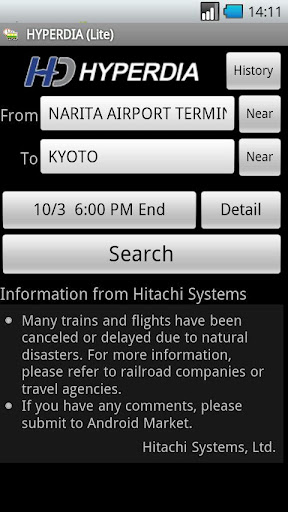
When I landed back in the West, I thought I had walked from 2007 right into 2017. Almost everyone I knew had a smartphone - my brother had gone through two of them. It was going to be tough to cope with not being able to efficiently email from my cell (Japan uses email based messaging, not SMS, so in order to send a text message you must send to and from a phone email, not a phone number) so I decided to jump on that bandwagon. Now I own a HTC Desire, and grumble to myself at least weekly about how fantastic it would have been to have had a smartphone in Japan. Yes, I got along just fine without, but I would have been on any of these apps (linked to the Android versions for you, but there are Apple and other equivalents for most!) in a heartbeat:


Photo courtesy of the Google Play Store Photo courtesy of the Google Play Store Photo courtesy of the Google Play Store Photo courtesy of the Google Play Store Photo courtesy of the Google Play Store


HYPERDIA(Lite) JapanRailSearch - Train schedules. I used the mobile web version on my Japanese phone. I cannot stress how many times I would have been (a) stranded somewhere or (b) lost, if I didn't have Hyperdia. So efficient.

Twitter - Likewise, used the mobile version. I loved being able to microblog about something, then go back and research it later on my computer. Tweets are short, too, so I was comfortable tweeting in Japanese and reading what my Japanese friends were posting なう.

Path or Foursquare -  I really liked Gowalla and it seemed like it had big support among Japanese users, but it was eaten up by Facebook. A check-in service would have been my number-one want in Japan. In a new country, everything is a big deal and it's tough to remember later all the things you saw and did, and tougher still to share them with friends back home. How cool would it have been to have been able to post a check-in from Tokyo Tower?

Instagram - I'm on the bandwagon now. This photo-sharing social media site would have been perfect for visiting temples, shrines, statues, skylines, anything!

WWWJDIC For Android - This is THE app for anyone struggling with Japanese. Can't read what's in front of you? Draw it into your phone and WWWJDIC will give you a translation.

Saora's JLPT Practice - Studying your Japanese while abroad? I hope so! This app is a great study tool that keeps you on pace for the Japanese Language Proficiency Test.

Kanji Draw 29% - There are a few kanji-drawing apps out there, but this is my favourite. Good interface and customization, and the app really makes sure you didn't just fluke into the right stroke order!

Google Translate - Straight up. Google's translate tools are very effective.

Barcode Scanner - QR codes are super popular in Japan and you can find them pretty much everywhere!

Japanese Traffic - I never drove, but this could be pretty indispensable to someone who did. The app real time traffic conditions in Japan, in Japanese and English.

Japanese Hot Spring Heaven - Searchable directory of over 4000 hot springs. Don't even care that there's no English version - I would manage.

Tokyo City Guide - By TripAdvisor. Tokyo Art Beat also has great reviews! There are tons and tons of city guide apps out there that would have been much easier to work with on those weekend trips than carrying a book would have been. Check out GoodLuckTripKANSAI for the Kansai area, or search the Internet for your destination!

Tokyo Emergency - Can't vouch for how well it works, but this guide has emergency numbers for if you're travelling in the Tokyo area, including consulate and embassy info. And I lost my passport in Tokyo once, so thumbs up for carrying this sort of helpful info around!

As they say...."there's an app for that." If you are visiting or living in Japan, and you have a smartphone, don't let it go to waste!

Monday, May 21, 2012

Tea

One of my many regrets is that I only became a bona-fide tea drinker since leaving Japan. I have always enjoyed iced tea and will take it over just about any other drink. Imagine my glee when I arrived in Osaka and found that iced tea was available in multiple varieties. Everywhere.

It was a happy discovery. I swore the first time I walked into a Lawson, just outside of the Keio Plaza Hotel in Shinjuku, that I was never leaving this country.

At the time, I favoured (iced) milk tea, iced and sweetened matcha, and really any kind of iced tea that crossed my path. I've loved Tazo passion tea, iced, ever since I spent a year working next door to a Starbucks, and I have always enjoyed black teas in general, but it wasn't until recently that I began to really drink and enjoy loose-leaf brewed and hot green tea. I've never been a big fan of hot drinks, and I've preferred my tea sweetened - which green almost never is in Japan, unless it is the kind of iced matcha you buy from a fountain dispenser! For a time, trying to get used to the taste and enjoy it, I was drinking Lipton green tea made from teabags and sweetened with honey (sacrilege!).

Recently, though, I have begun collecting loose green teas and brewing them myself, to help me get sugar out of my diet. I enjoy my English tea with cream and sugar, so a switch to green seemed like the best approach to have my daily tea without the daily sugar cubes. A friend gave me loose hojicha and genmaicha for my birthday, my roommate and best friend gave me a beautiful teapot for Christmas, and I recently invested in some quality tea strainers (the ball-shaped tea infusers are no good for green - the leaves can't 'breathe' enough!) that fit into the teapot. My mother just gave me a set of Japanese-style miniature cups as well - so now I've been nursing this pot of pre-strained hojicha for the last three hours, as it sits on its little ceramic teapot-warmer. Nice!

I've been learning about brewing green tea, in the meantime. Did you know the leaves will burn if you try to brew them in boiling water? That's where the bitter taste typically comes from. You should brew green tea in water that's ideally 85 degrees Celsius. After you boil your water (you want to boil the chlorine out of it), let it sit for a few minutes to cool to the right temperature. Or you can use a programmable pot or kettle to bring it down to 85 for you - right now, I own an electric pot of a style that's very popular in Japan. We kept a very nice one in the English department, and on those infrequent winter days when I did feel like a hot chocolate or a strawberry latte was in order, the hot water was always ready to go.

Japanese electric pot
I picked up my Panasonic electric pot for about ¥3500, or $40.
Overseas models will cost you twice that.
This one was bottom-line and had no temperature gauge or electric dispenser.

Now I own a fancier one that has settings for black tea, green tea and baby bottle milk. (Handy for new parents - useless to me) The insulated pot keeps it at that exact temperature for you at all times. I rarely used my Panasonic pot pictured above, though I bought it to encourage myself to drink more tea. Now, I use the one I have, every single day. I lucked into it on Kijiji one day as I was searching for Japanese house furnishings. A university student here was moving out of his dorm and looking to sell his pot on Kijiji for $25. There was no instruction manual and all the buttons were in Japanese, so I guess he figured it wouldn't sell, even though the overseas models of these things will run you $110 or more here in Toronto. I snapped it up; downloaded the English version of the manual online, cleaned it carefully with vinegar and baking soda. Works like a charm and so useful.

The thing I haven't quite gotten the hang of is finding green teas that I really like, as opposed to just drinking because they are sugar-free. That changed when I received a packet of quality hojicha for my birthday. Love this stuff! It's a nice, mellow taste. The genmaicha I got is also fantastic. I think in the past when I prepared green tea, I didn't really know the proportions...I always made it way too strong and with water that was too hot, and I ended up ruining it. I always wondered why I could drink cup after cup from the local kaitenzushi restaurant, and be absolutely disgusted with my own home-brewed teas!